Customers
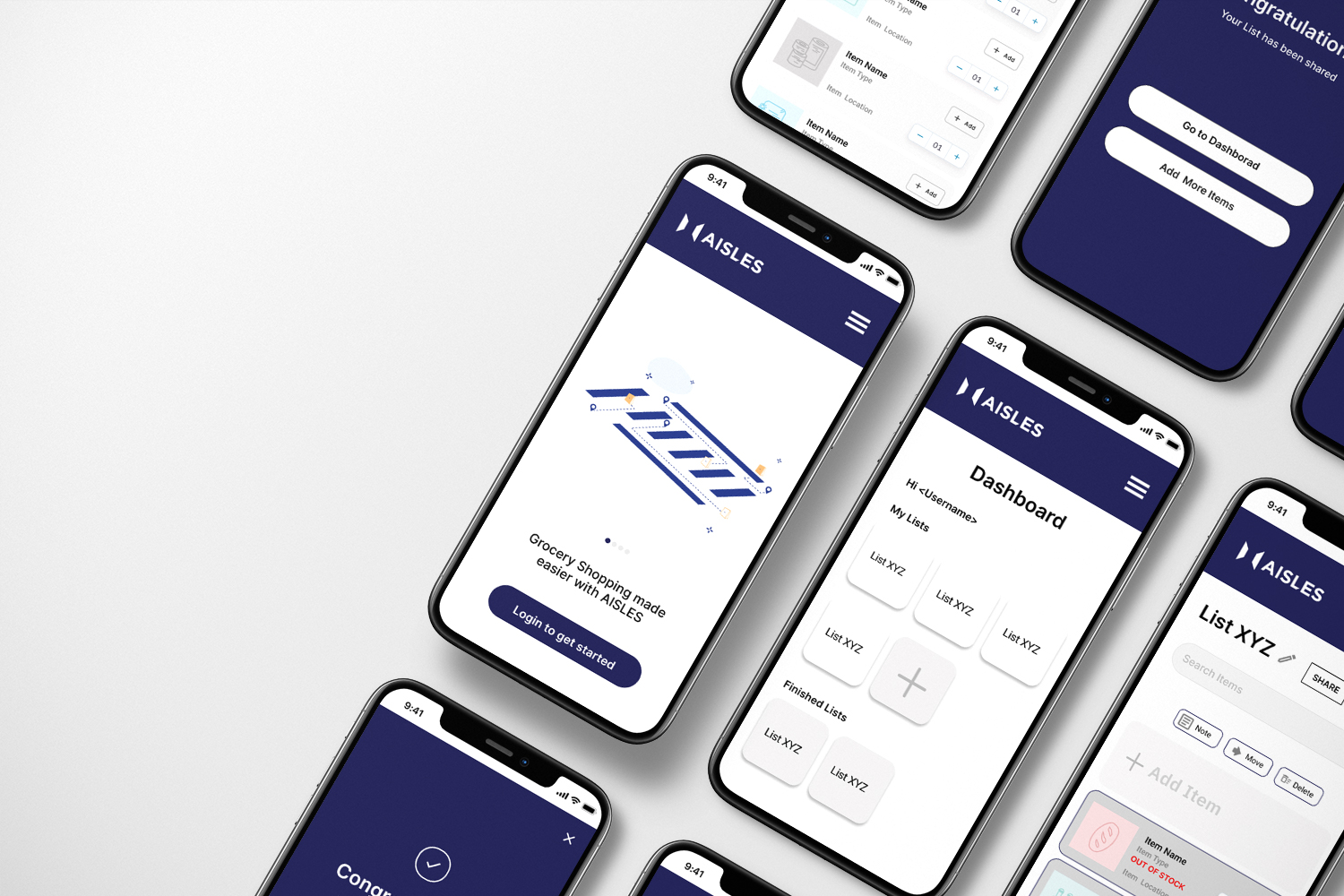
Create, organize, reuse, and share shopping lists while following an optimized route through the store.
IBM × SUNY Oswego · Connected retail
A route-aware grocery experience designed to help customers and employee shoppers locate products and complete shopping lists more efficiently.
Measured outcome
349 seconds with Aisles · 1,228 seconds without Aisles
Project at a glance
The challenge
Finding products in a large grocery store can be unexpectedly time-consuming—especially when shoppers are unfamiliar with the layout or need items spread across multiple aisles.
The challenge was to transform a shopping list into an efficient in-store route while supporting the broader ecosystem behind it: customers, employee shoppers, and store administrators.
Understanding the system
Looking at the roles together moved the work beyond a standalone shopping list and revealed how lists, orders, inventory, and location data needed to connect.
Create, organize, reuse, and share shopping lists while following an optimized route through the store.
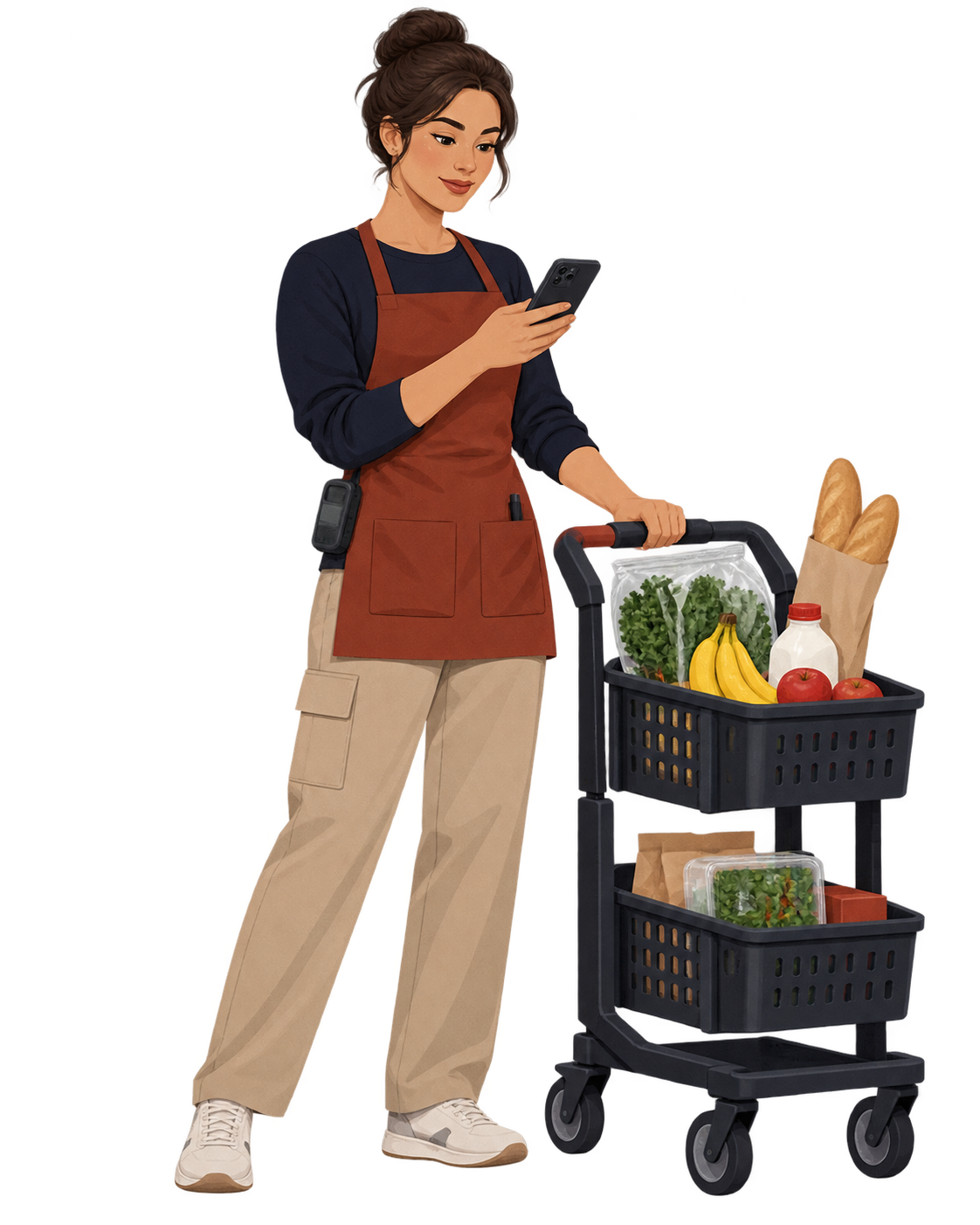
Review assigned orders, locate products, and fulfill one or multiple customer lists efficiently.

Manage order assignments, inventory information, and product locations that support both experiences.
Design approach
Route-aware shopping
A traditional shopping list tells people what to buy, but not where to find it. Aisles organizes products by store location and guides shoppers from one item to the next using aisle, shelf, and rack information.
Collaborative shopping
Customers can create, save, edit, and share lists so multiple shoppers coordinate from the same source instead of relying on separate messages.
Connected fulfillment
The navigation logic also supports employees fulfilling online orders. Administrators can review orders, assign employee shoppers, and maintain the product-location information behind the experience.
How the experience evolved
The project began by mapping how customers would create a list, begin a shopping trip, locate products, and complete their purchase. Developing the user flow first helped identify key decisions around product availability, navigation, list changes, and trip completion before moving into wireframes.
Validating the concept
Six participants completed the same ten-item shopping task in a simulated store under two conditions: once without Aisles and once with the prototype.
We compared task-completion time and collected participants’ impressions of the experience.
Results
Participants completed the task in approximately 72% less time with Aisles and responded positively to the prototype’s usefulness, information quality, and interface quality.
Research note: This was a small, simulated study, so the findings were directional and would need to be validated in a working grocery store.
What I learned
Aisles became more useful when the shopping list was connected to product location, store operations, and fulfillment workflows. The project reinforced the importance of designing around the complete service and validating whether an experience improves real task performance—not only whether users respond positively to it.
More selected work